
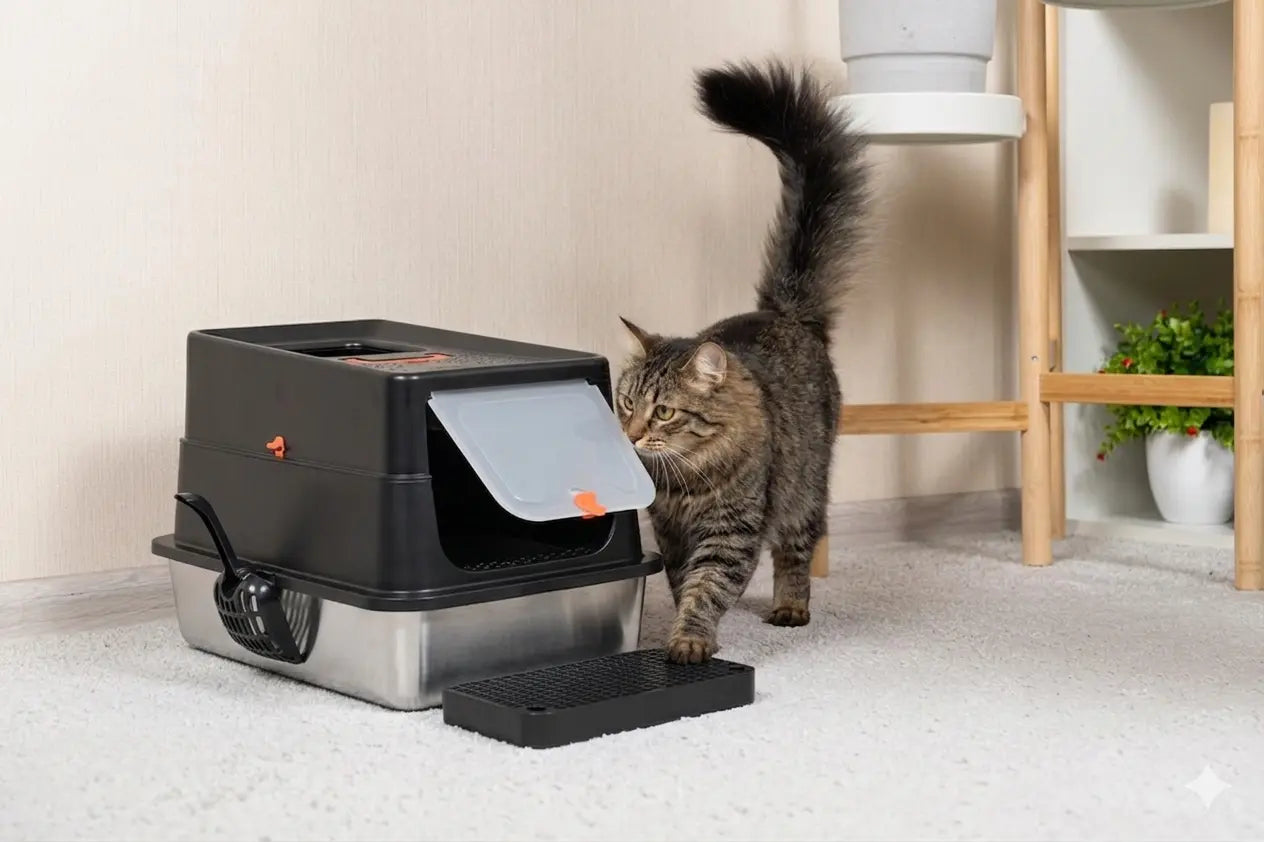
For indoor cats and mostly‑indoor cats, the cat litter box is one of the most important parts of daily life. Get it right, and your home stays cleaner, your cat feels secure and accidents are rare. Get it wrong, and you can end up with smells, mess and a very unhappy cat.
This is especially true in typical UK homes and flats, where space is limited and rooms are often shared closely with pets. The “right” cat litter box needs to fit your cat’s size and personality, match your living space, and be easy for you to clean.
In this guide, we’ll walk through how to choose the best cat litter box for your UK home, from small flats to larger houses, and how designs from the Pet Skylos cat litter boxes collection can help.
1. Understand the Main Types of Cat Litter Box
Before you decide what you need, it helps to know the main styles you’ll see when shopping.
Open Litter Trays
These are simple, uncovered trays with low‑to‑medium sides.
Best for:
- Kittens learning to use the box
- Senior cats or cats with mobility issues
- Very shy cats who don’t like feeling trapped
Pros:
- Easy for cats to get in and out
- Simple to scoop and clean
- Lets you see when it needs cleaning
Cons:
- Offers less privacy
- Litter scatter and odour are more noticeable
You’ll see open cat litter trays and boxes in the Pet Skylos litter box collection, ideal for young and older cats.
Covered / Hooded Cat Litter Boxes
Covered or hooded cat litter boxes have a roof and sides, with an entrance at the front.
Best for:
- Cats that like privacy
- Multi‑person households with more noise/activity
- UK flats where you want to hide the litter area a bit
Pros:
- Helps contain odour inside the box
- Reduces litter scatter
- Looks tidier and more discreet in small spaces
Cons:
- Some cats may feel trapped if the entrance is small
- Needs enough internal space so your cat can turn around
Covered designs are very useful in UK homes where the litter box might sit in a bathroom, hallway or utility room.
Top‑Entry Cat Litter Boxes
Top‑entry boxes have an opening on the top. Your cat jumps in from above and exits the same way.
Best for:
- Energetic diggers
- Cats that kick litter everywhere
- Small flats where you want maximum scatter control
Pros:
- Greatly reduces litter tracking and scatter
- Keeps dogs and small children out more easily
- Very neat footprint on the floor
Cons:
- Not ideal for kittens, arthritic seniors, or less agile cats
- Some cats need more training to get used to it
If your cat is young, agile and loves digging, a top‑entry cat litter box from the Pet Skylos collection can help keep your floors much cleaner.
High‑Sided Cat Litter Boxes
High‑sided boxes are still open at the top, but the walls are taller.
Best for:
- Cats that dig vigorously
- Cats that like to pee high up the sides
- Homes where side‑scatter is a big issue
Pros:
- Keeps litter and spray inside the box
- Still easy to access for most adult cats
- Good compromise between open and enclosed
Cons:
- Entrance must be low enough for kittens/senior cats
- Some very large cats may still need more floor space inside
High‑sided litter boxes are particularly useful in shared UK spaces like bathrooms and utility rooms.
2. Choosing a Cat Litter Box for a Small UK Flat vs Larger House
For Small UK Flats and Apartments
In a flat, you often don’t have a spare utility room or garage. Your cat litter box needs to:
- Take up minimal floor space
- Control odour as much as possible
- Look reasonable in shared living areas
Good options:
- Covered / hooded cat litter boxes – help hide the tray and reduce smells.
- Top‑entry cat litter boxes – great for keeping litter inside, ideal for bathrooms or corners.
Try placing them:
- In a bathroom corner
- Behind a piece of furniture
- In a hallway nook away from direct foot traffic
Many designs in the Pet Skylos cat litter boxes & trays collection are compact enough for UK flats while still being comfortable for your cat.
For Larger UK Houses
With more rooms, you have extra flexibility:
- You can place boxes in utility rooms, cloakrooms or under the stairs
- You can offer multiple boxes in different areas (ideal for multi‑cat homes)
Good options:
- Larger open boxes or high‑sided trays for bigger cats
- Covered cat litter boxes in more visible areas
- A combination of open and covered boxes for different cats’ preferences
Remember the general rule for multi‑cat homes:
Number of cats + 1 = ideal minimum number of litter boxes.
3. Matching the Litter Box to Your Cat’s Age and Mobility
Kittens
Kittens need:
- Low‑entry, open cat litter trays
- Easy, obvious access
- Enough space to turn, but not an overwhelming cavern
Avoid:
- Top‑entry boxes (too hard to access)
- Very high‑sided designs
Adult Cats
Most adult cats can use:
- Open trays
- Covered boxes
- High‑sided or top‑entry designs (if healthy and agile)
Your choice should be based more on personality and home layout than age at this stage.
Senior Cats and Cats with Mobility Issues
Older cats or those with arthritis benefit from:
- Low entrances (easy to step over)
- Open or gently covered cat litter boxes
- Non‑slip mats around the entrance
Avoid:
- Very tall sides with no low entrance
- Top‑entry boxes that require jumping in and out
Within the Pet Skylos litter box collection, choose designs with lower front entries and comfortable internal space for seniors.
4. How Big Should a Cat Litter Box Be?
A common mistake is choosing a litter box that’s too small.
Guideline:
- The internal length should be at least the length of your cat from nose to base of tail
- There should be enough width for them to turn fully inside
For larger cats (e.g. Maine Coons, Norwegian Forest Cats, British Shorthairs):
- Go up one size
- Consider high‑sided or large covered boxes that provide extra room
Remember: a cat that feels cramped may avoid the box or have accidents just outside it.
5. Cleaning and Odour Control: Design Matters
In UK homes, especially in winter when windows are often closed, odour control is crucial.
When choosing a cat litter box, look for:
- Smooth, non‑porous interior surfaces
- Rounded corners rather than sharp angles
- Removable lids or tops for easy access
- Options with built‑in sieves or sifting trays (if you like that style)
These details make:
- Daily scooping faster
- Weekly deep cleaning easier
- Odours less likely to linger
Pairing a good box with regular scooping and the right litter will dramatically reduce smells in small UK spaces.
6. Where to Put Your Cat Litter Box in a UK Home
Even the best cat litter box will cause problems if placed badly.
Good Locations
- Quiet corners of bathrooms
- Utility rooms or cloakrooms
- Spare rooms or landings
- Living rooms behind furniture or screens (if well ventilated)
Places to Avoid
- Right next to food and water bowls
- Directly beside noisy appliances (washing machines, tumble dryers)
- Draughty doorways or high‑traffic corridors
- Completely dark, inaccessible corners
Your cat should be able to:
- Reach the box easily
- Use it without being startled
- Feel like they can escape if needed
If space is tight, a covered cat litter box from the Pet Skylos collection placed in a discreet corner can work very well.
7. One Box or Multiple Boxes?
Single‑Cat Homes
Ideally:
- At least one generously sized cat litter box
- In a convenient location for the cat
- Plus an optional second box if you have space (e.g. upstairs vs downstairs)
Multi‑Cat Homes
General rule:
Number of cats + 1 litter box
Example:
- 2 cats → 3 boxes
- 3 cats → 4 boxes
Spread them around your home, not all in one room. This reduces:
- Territorial tension
- Guarding behaviour
- Accidents outside the box due to access issues
8. Signs You Might Need to Change Litter Box Type
Your current setup might not be ideal if:
- Your cat consistently kicks litter out of the box → try high‑sided or top‑entry.
- Your cat pees over the edge → try higher sides or a larger box.
- Your cat seems reluctant to use the box → consider a more open design or different location.
- You struggle with cleaning → look for smoother surfaces and removable tops.
Sometimes a small change—from open tray to covered box, or from low sides to high—is enough to fix recurring issues.
FAQs: Choosing a Cat Litter Box for UK Homes
1. What is the best cat litter box for a small UK flat?
In small flats, covered cat litter boxes or neat, modern open boxes work well. They hide the litter area better and help contain odour and scatter. Place them in a bathroom corner, hallway nook or behind furniture where there’s some airflow.
2. Are covered litter boxes better than open trays?
It depends on your cat and your home:
- Covered boxes: better for odour control and tidiness, good in busy homes and small spaces.
- Open trays: better for kittens, seniors, very shy or easily startled cats.
You can start with one style and adjust based on how your cat responds.
3. Are top‑entry cat litter boxes a good idea?
Top‑entry cat litter boxes are great for:
- Reducing litter tracking
- Keeping dogs and small children out
- Active, agile adult cats
They’re not ideal for kittens, seniors or cats with joint issues.
4. How often should I replace a cat litter box?
With regular cleaning, a good‑quality cat litter box can last years. Replace it if:
- Plastic becomes scratched and holds odour
- Cracks or damage appear
- Hinges or clips on covered boxes break
- Deep cleaning no longer removes smells
5. Where can I find cat litter boxes designed for UK homes and indoor cats?
At Pet Skylos, our cat litter boxes & trays collection includes:
- Open trays for kittens and senior cats
- Covered and hooded cat litter boxes for better privacy and odour control
- High‑sided and modern designs for small UK flats and larger houses
If you’re ready to upgrade your litter setup, explore the full range of cat litter boxes and find the style that best fits your cat and your home.


