
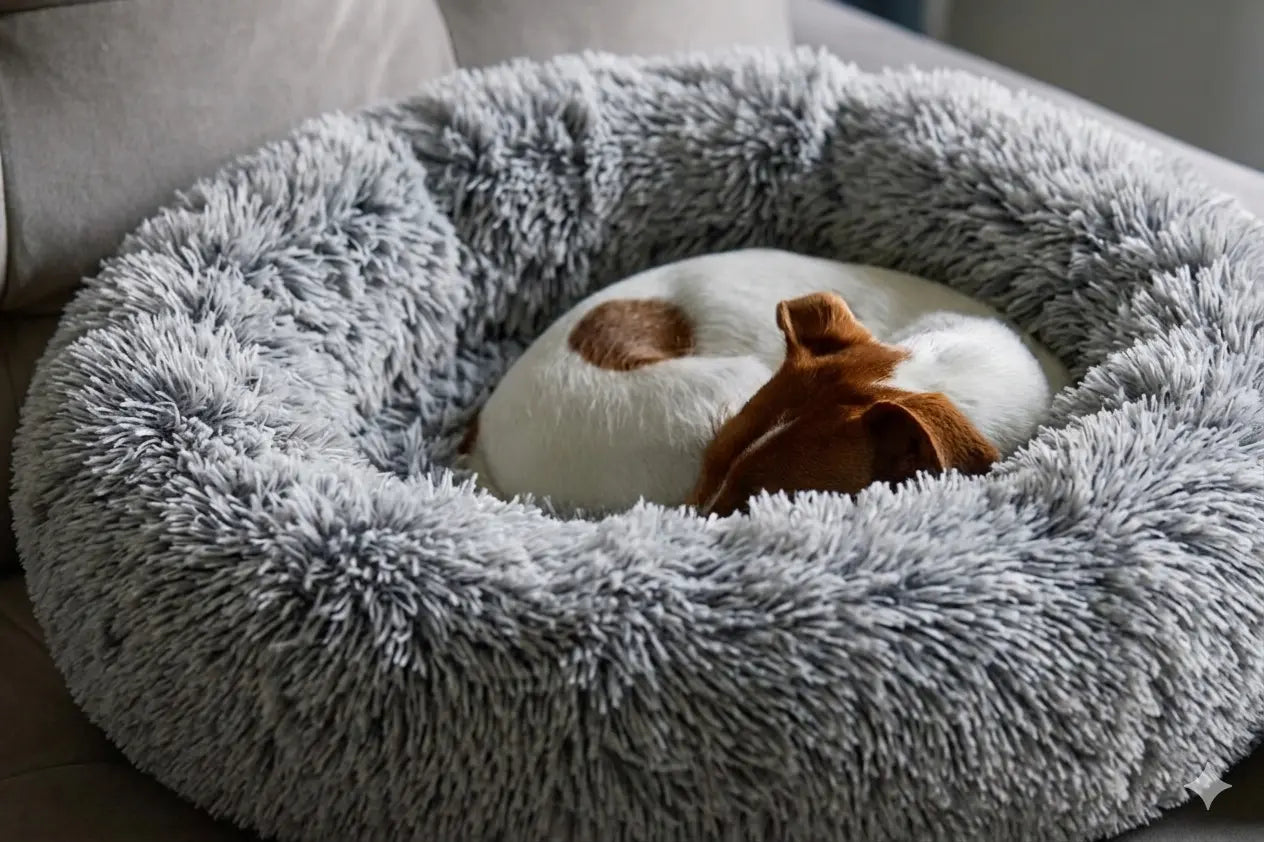
If your dog paces at night, jumps at every noise or struggles to settle when you leave the room, you’ve probably seen calming dog beds advertised as a quick fix. These fluffy, donut‑shaped beds with raised sides claim to reduce anxiety and help dogs sleep better—but do they actually work, or are they just a trend?
In this UK‑focused guide, we’ll look at:
- What “anxious” behaviour in dogs really looks like
- How calming dog beds are designed to help
- Which dogs benefit most (and which might not)
- How to use a calming bed alongside training and routine
- What to look for when choosing a calming dog bed for your home
We’ll also show how different options in the Pet Skylos calming dog beds collection can support your dog’s comfort and sense of security.
1. What Does Anxiety Look Like in Dogs?
Many dogs feel a bit unsettled during storms or fireworks, but some experience anxiety more often or more intensely.
Common signs of anxiety in dogs include:
- Pacing or restlessness, especially in the evening or when alone
- Shaking or trembling without a clear medical cause
- Excessive panting or drooling indoors
- Hiding, clinging or following you from room to room
- Destructive behaviour when left alone (chewing, scratching doors)
- Whining, barking or howling when separated from you
If you recognise several of these behaviours in your dog, it’s worth talking to your vet or a qualified behaviourist. A calming dog bed is not a replacement for professional advice—but it can be a helpful part of a broader comfort strategy.
2. What Is a Calming Dog Bed and How Is It Different?
A calming dog bed is usually designed with:
- Raised bolsters or sides
- A round or oval “donut” shape
- Very soft, plush, often faux‑fur fabrics
- Thick, cushioned bases
The idea is to mimic:
- The feeling of being cuddled or surrounded
- The way puppies sleep in a pile with their littermates
- A safe den‑like space where a dog can curl up and feel protected
Compared to a standard flat bed, a calming bed gives:
- More enclosure around the body
- More support around the neck and head
- A textured, cosy surface that invites snuggling and nesting
You can see examples of this design in the Pet Skylos calming dog beds range—they’re all built around this “comfort + security” principle.
3. Can a Calming Dog Bed Really Reduce Anxiety?
A bed on its own cannot “cure” anxiety. However, a well‑designed calming dog bed can:
- Help dogs feel safer in stressful situations
- Encourage deeper, more restful sleep
- Provide a consistent “safe spot” to retreat to
- Reduce overall arousal levels, making training easier
Why it can work:
- Raised bolsters allow dogs to lean and curl into them, which can feel like a hug.
- A round, nest‑like shape gently “contains” the dog, offering boundary and structure.
- Soft, warm fabrics give sensory comfort, similar to soft bedding or a fur pile.
For many dogs, this combination reduces restlessness and helps them settle faster, especially when combined with:
- A predictable routine
- Positive training
- Adequate physical and mental exercise
So yes: calming dog beds can genuinely help anxious dogs, but they are one tool among many—not magic.
4. Which Dogs Benefit Most from Calming Dog Beds?
1. Noise‑Sensitive Dogs
Dogs that react strongly to:
- Fireworks (Bonfire Night, New Year’s Eve)
- Thunderstorms
- Loud construction or traffic noises
often feel better having a den‑like place to hide. A calming bed placed in a quiet corner or under a table can become their “safe zone” when the world feels too loud.
2. Rescue Dogs and Newly Adopted Dogs
Rescue dogs, especially those with uncertain pasts, may:
- Be unsure where it’s safe to rest
- Startle easily at normal household sounds
- Need time to trust a new home
A calming dog bed gives them one consistent, soft, secure place that always feels the same. Over time, just stepping into that bed can become a calming cue.
3. Dogs with Separation‑Related Behaviours (Mild Cases)
For dogs that:
- Struggle a little when left alone but are not in full panic
- Pace and whine rather than destroy everything
a calming bed can be used as part of a “settle” routine:
- Calm music or background noise
- A chew or stuffed Kong
- A familiar calming bed in a quiet area
For more serious separation anxiety, always involve a behaviourist—but even then, a stable safe spot like a calming bed is often recommended.
4. Puppies and Young Dogs Learning to Settle
Puppies are still learning how to nap away from constant stimulation.
A calming puppy bed:
- Gives them a place to crash after play
- Makes crate training or pen time more inviting
- Helps them learn that resting alone can be safe and comfortable
Several designs in the Pet Skylos calming dog beds collection are suitable for puppies, with soft sides and supportive bases.
5. When a Calming Dog Bed Might Not Be Enough
There are cases where a calming bed alone is unlikely to help:
- Severe separation anxiety
- Aggression rooted in fear
- Medical issues causing restlessness (pain, discomfort, hormonal issues)
In these situations, a calming bed may still provide comfort, but:
- You should always rule out medical causes with a vet.
- Behaviour modification and professional guidance are essential.
Think of a calming dog bed as a good mattress for a human with insomnia: it helps, but doesn’t fix stress at work or a health problem.
6. How to Use a Calming Dog Bed Effectively
Choose the Right Spot
Place the bed:
- In a quiet area, away from constant foot traffic
- Where your dog already likes to rest (corner of the living room, near your sofa, bedroom)
- Away from direct draughts and loud appliances
Some dogs prefer:
- A calming bed in the living room for daytime naps
- A second bed in the bedroom for night‑time security
Build Positive Associations
Help your dog see the bed as a good place:
- Feed them chews, Kongs or long‑lasting treats in the bed
- Gently guide them there when you see signs of tiredness
- Praise calmly when they choose to lie down in it
Avoid:
- Sending them there as “punishment”
- Forcing them to stay if they want to leave
The Pet Skylos calming dog beds are designed to be inviting enough that many dogs naturally choose them once they understand it’s their spot.
Combine with Calm Routines
For anxious dogs, try combining the calming bed with:
- A short wind‑down walk or play, then calm time
- Dimmed lights and reduced household activity
- Soft background noise or white noise during fireworks
Your goal is to make the bed part of a reliable “calm down” ritual.
7. What to Look for in a Good Calming Dog Bed
Not all “calming” beds are created equal. When choosing one, especially for use in a UK home, look for:
1. Proper Size
- Your dog should be able to comfortably curl up inside the bed.
- For “donut” designs, the inner area should accommodate your dog’s body without forcing them to hang off the edges.
Too small = cramped and uncomfortable.
Too big = less of that “held” feeling.
2. Supportive Base
While softness is important, your dog still needs support:
- Look for a thick, cushioned base that doesn’t immediately flatten.
- For heavier or large breeds, consider calming designs with more structured or orthopaedic cores.
A good calming dog bed should feel plush on top but not allow your dog’s hips to sink all the way to the floor.
3. Quality Fabrics and Stitching
In real UK homes:
- Muddy paws
- Drool
- Hair and general wear
are unavoidable.
Look for:
- Durable stitching
- High‑quality faux fur or plush materials that don’t shed excessively
- Fabrics that retain softness after washing
4. Removable, Washable Covers
Essential for hygiene and odour control:
- Removable covers that are machine‑washable
- Where possible, water‑resistant liners around the inner padding
Many designs within the Pet Skylos calming dog beds range are created with this in mind, so you can keep the bed fresh even with regular use.
8. Common Mistakes When Using Calming Dog Beds
-
Expecting instant “cure‑all” results
- Some dogs need time to associate the bed with safety and comfort.
-
Buying the wrong size
- If the bed is too small, your dog may never fully relax in it.
-
Placing it in a stressful location
- Right next to the front door, under a TV, or near noisy appliances.
-
Never washing it
- Dirty, smelly beds are not calming for dogs—or humans.
-
Using only the bed, but ignoring routine and exercise
- An under‑exercised or overstimulated dog will still struggle to settle, no matter how soft the bed is.
FAQs: Calming Dog Beds for Anxious Dogs
1. Do calming dog beds really work for all anxious dogs?
No single product works for every dog. However, many owners report that calming dog beds:
- Help their dog settle faster
- Reduce pacing and whining
- Encourage deeper, longer naps
They are most effective when combined with a good routine, exercise and, when needed, professional behaviour advice.
2. Are calming dog beds suitable for puppies?
Yes, calming beds can be very comforting for puppies, especially when:
- They’re first separated from their littermates
- They’re adjusting to a new home
Choose an appropriately sized bed and make sure the materials are durable enough for puppy chewing and play.
3. Can calming dog beds help with separation anxiety?
For mild separation‑related issues, a calming dog bed can be part of the solution by giving your dog a safe, predictable place to rest. For severe separation anxiety, you should always work with a vet and behaviourist; the bed alone won’t be enough, but it can still be a helpful comfort tool.
4. How long does it take for a dog to get used to a calming bed?
It varies. Some dogs climb in and love it straight away. Others take a few days or weeks of:
- Gentle encouragement
- Treats and chews in the bed
- Consistently available placement in a good spot
Patience and positive associations are key.
5. Where can I buy calming dog beds designed for UK homes?
At Pet Skylos, our calming dog beds collection is designed with:
- Donut‑style and bolstered calming beds
- Soft, cosy fabrics and supportive bases
- Sizes for small dogs, medium breeds and larger companions
If your dog seems anxious, restless or struggles to relax, the right calming dog bed, used alongside a calm routine and appropriate exercise, can be a simple but powerful way to improve their daily comfort and sense of security.


