
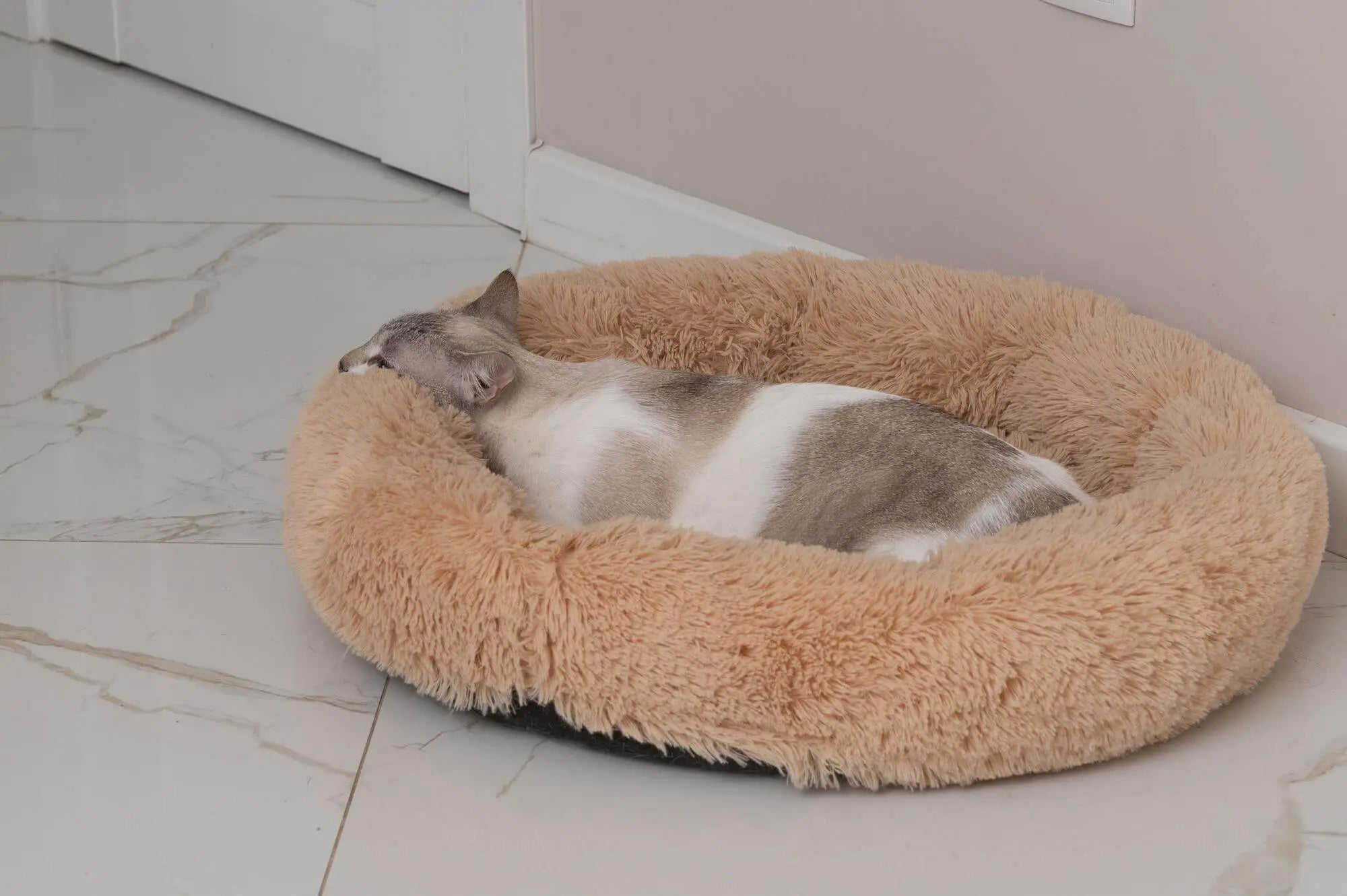
You’ve chosen a cosy new cat bed or cat cave, brought it home, and proudly set it up—only to find your cat completely ignoring it. Sound familiar? Very often, the issue isn’t the bed itself, but where you’ve placed it.
Indoor cats are picky about sleeping spots. The right location can make the difference between a bed that’s used daily and one that just gathers dust. In a typical UK home or flat, space, light, noise and temperature all play a role.
In this guide, we’ll explore the best places to put your cat’s bed in a UK home, common mistakes to avoid, and how to create a sleeping setup your cat will actually love. We’ll also show how different options in the Pet Skylos cat bed & cat house collection can be placed strategically around your home.
1. Start by Watching Where Your Cat Already Sleeps
Before you decide where to put a cat bed, observe your cat for a few days:
- Do they prefer high spots (tops of wardrobes, shelves, cat trees)?
- Do they hide underneath beds, behind sofas, or inside wardrobes?
- Do they follow the sun patches across the floor?
- Do they tend to sleep near you, or in more distant rooms?
Your cat has already told you what they like—you just need to match their existing habits with the right bed in the right spot.
When you browse the Pet Skylos cat beds & cat houses, think less about where you want the bed and more about where your cat has already claimed territory.
2. General Principles for Placing a Cat Bed
Quiet, But Not Completely Isolated
Cats usually like:
- Areas with low to moderate traffic, not constant noise
- Spaces where they can see what’s going on, but aren’t in the way
- Rooms where people spend time, especially if they’re bonded with you
Good examples:
- A corner of the living room
- A spot in the bedroom
- A landing or upstairs hallway
Bad examples:
- Right next to the front door
- In a narrow hallway where people constantly step over them
- On top of or next to noisy appliances (washing machines, tumble dryers)
Warm, But Not Overheating
UK homes can be chilly and draughty in winter. Cats often seek out:
- Radiators
- Sunny windowsills
- Conservatories (with caution for temperature swings)
When placing cat beds:
- Near a radiator: safe distance so the bed doesn’t get too hot
- Near windows: avoid places with strong, cold draughts
- On hard floors: choose beds with thicker bases for insulation
A Clear View and an Escape Route
Most cats like:
- Being able to see the room or doorway
- Having a clear path to leave if they feel threatened
Avoid placing beds:
- In cramped corners with no easy way out
- Under tables crowded with boxes or clutter
Especially in multi‑cat or mixed pet households (e.g. with dogs), give your cat a bed with a good vantage point and easy exit.
3. Best Places to Put Cat Beds in a UK Home
A. Living Room: The “Family Zone”
Most indoor cats want to be near where people spend time.
Good living room locations:
- Corners of the sofa area (but not in walkways)
- Beside a bookshelf or under a side table
- Next to a patio door with a view of the garden
Best bed types here:
- Open cat beds or sofa‑style loungers
- Simple cushioned beds that blend with your décor
The Pet Skylos cat bed collection includes open, stylish beds that suit living spaces while giving your cat their own spot.
B. Bedroom: The Night‑Time Retreat
Many cats choose to sleep where you sleep.
Good bedroom locations:
- Corner of the room, away from direct draughts
- At the foot of your bed (on the floor or furniture)
- On a sturdy chest or bench near the bed
Best bed types:
- Cosy open beds
- Enclosed cat caves for shy or easily disturbed cats
For cats that like being near you but not right on your pillow, a dedicated cat bed in the bedroom can save your blankets from fur.
C. Home Office or Study: The Work Companion Spot
If you work from home, your cat may want to be near you, but not on your keyboard.
Good locations:
- On a chair or stool near your desk
- On a shelf or window ledge within view
- Under your desk if they like being close but out of the way
Best bed types:
- Light, movable cat beds or mats
- Smaller caves/boxes for cats that like hiding while you work
D. Landings and Hallways: Quiet, Overlooked Spaces
In multi‑storey UK homes, landings can be surprisingly good nap spots—quiet, slightly elevated, and with views of comings and goings.
Tips:
- Use a corner landing area that doesn’t block movement
- Avoid top/bottom stair edges where people may trip
- Choose beds with non‑slip bases
These spots often work well for nervous cats that like to watch from a distance.
E. Hidden Corners for Shy or Newly Adopted Cats
If your cat is:
- Newly adopted
- A rescue adjusting to your home
- Naturally anxious or easily startled
They may prefer cat caves or cat houses in more hidden areas:
- Under side tables
- In the corner behind larger furniture
- Inside open wardrobe bottoms or shelving cubes
Place an enclosed cat house from the Pet Skylos collection where they already hide, so you can swap them from random floor spots to a proper, washable bed.
4. Where NOT to Put Your Cat’s Bed
Avoid these locations as much as possible:
Right Next to Litter Boxes
Cats generally don’t like sleeping:
- Next to their toilet
- In areas with strong odours
- Where they may associate rest with elimination
Keep cat beds and litter boxes in separate areas of your home.
In Constantly Busy Doorways
Bad places:
- Directly by front or back doors
- Narrow hallways that everyone uses
- Anywhere people regularly step over the bed
This can make your cat feel vulnerable and exposed, reducing the chance they’ll use the bed.
In Very Noisy Zones
Try not to place beds:
- Right by TVs or speakers
- Next to the washing machine or dishwasher
- Near children’s play corners
Even confident cats appreciate some peace for proper sleep.
In Very Cold, Draughty Spots
Avoid:
- Right next to poorly sealed windows or doors
- Bare concrete or tiled floors without insulation
- Conservatories that drop very cold at night
If you must place a bed on a cold hard floor, choose one with a thick base or add a mat underneath for insulation.
5. Using Height: Vertical Spaces as Bed Locations
Cats naturally feel safer up high.
Ideas:
- Place a light cat bed or cushion on sturdy shelves
- Use the top of chests or wardrobes (if reachable and safe)
- Combine a cat tree with a soft bed or mat on the top platform
Always make sure:
- The surface is stable and wide enough
- There’s a safe way up and down
- No breakable items are nearby
Elevated beds can be especially helpful in homes with dogs or small children.
6. Should You Have More Than One Cat Bed?
For most indoor cats, yes.
Why multiple beds help:
- Cats rotate sleeping spots based on temperature, light and noise
- Extra beds reduce tension in multi‑cat homes
- Different heights/locations let your cat choose their comfort level
A simple setup for one indoor cat might be:
- One open cat bed in the living room
- One enclosed cat cave in a quiet bedroom
- One elevated spot on a safe shelf or furniture top
You can mix open beds and enclosed cat houses from the Pet Skylos cat bed & house collection to create a flexible “sleep network” in your home.
7. Helping Your Cat Use Their Bed in the New Location
If your cat ignores their new bed at first, try:
- Placing it exactly where they already like to sleep
- Moving favourite blankets or old towels into the bed
- Adding a small amount of catnip (if they react positively to it)
- Rewarding them with calm praise or a treat when they choose the bed
Avoid:
- Forcing or dragging them into it
- Punishing them for sleeping elsewhere
- Constantly moving the bed—give them time to trust the spot
Most cats will gradually adopt a bed if it’s placed well and smells familiar.
FAQs: Placing Cat Beds in UK Homes
1. Should I put my cat’s bed in my bedroom?
If your cat enjoys being near you and you’re happy for them to sleep there, the bedroom is often a great choice. Place the cat bed:
- In a corner away from draughts
- At the foot or side of your bed
- On a stable piece of furniture nearby
This can reduce them jumping onto your pillow or sleeping on your head.
2. Can I put a cat bed on the sofa?
Yes, many people place a small cat bed or blanket on a specific part of the sofa. This:
- Gives your cat a “designated” spot
- Helps contain fur and reduce wear on the whole sofa
Just ensure it’s stable and not easily knocked off.
3. Is the kitchen a good place for a cat bed?
It depends. Kitchens are often:
- Warmer
- Central in UK homes
But they can also be:
- Noisy
- Busy
- Full of food smells
If your kitchen has a quiet corner away from food prep, it can work. Avoid areas close to ovens, hobs or very busy walkways.
4. How far should a cat bed be from the litter box?
Ideally:
- In a different part of the room
- Or a different room altogether
At minimum, keep them several metres apart and not in direct line of sight if possible. Cats usually prefer a bit of separation between sleeping and toileting areas.
5. Where can I find cat beds and cat houses suitable for UK homes?
At Pet Skylos, our cat beds & cat houses collection is designed with indoor cats and UK home layouts in mind. You’ll find:
- Open loungers for living rooms
- Enclosed cat caves for shy or nervous cats
- Stylish cat houses that fit into corners and under side tables
If you want your cat to actually use their bed, the right location is as important as the bed itself. Once you’ve picked a cosy design, try placing it where your cat already loves to sleep—you’ll be surprised how quickly it becomes their favourite spot.


