
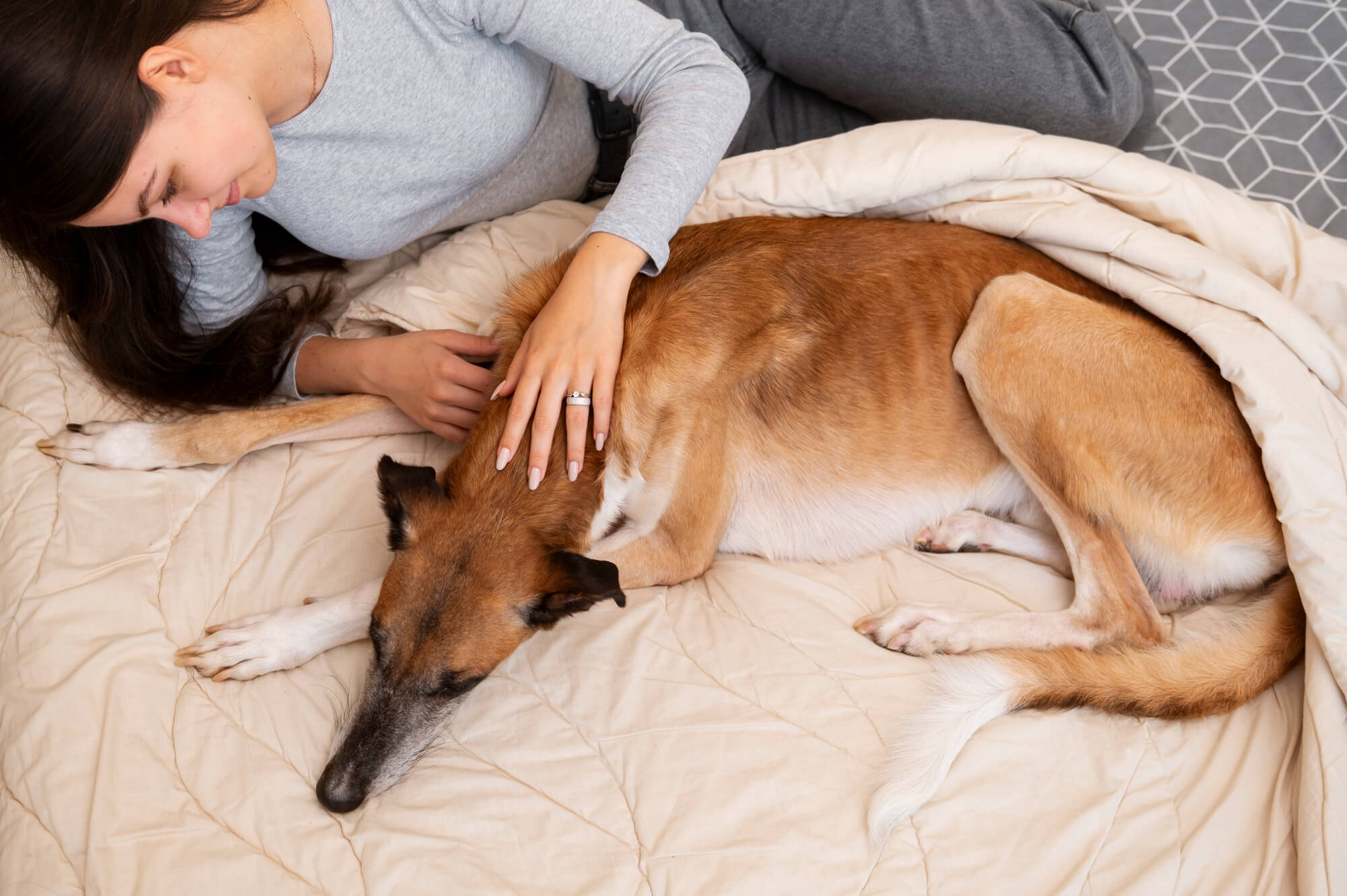
Why Your Dog Really Does Need a Dog Bed (And Not Just Your Sofa)
Ask most UK dog owners where their dog sleeps and you’ll hear the same answers:
“On the sofa.”
“On my bed.”
“Wherever he wants.”
It feels generous and loving – and it is. But from a health, hygiene and behaviour point of view, relying only on human furniture is rarely the best long‑term plan. A well‑chosen dog bed is one of the simplest upgrades you can make to your dog’s daily life.
Let’s look at what a dedicated dog bed actually does for your dog – and for you.
1. The Hidden Health Job: Joint Support and Spinal Alignment
Hard floors and sagging cushions don’t support a dog’s body evenly. Over time, this matters more than most people realise—especially for:
- Large breeds (Labrador, Golden Retriever, German Shepherd)
- Long‑backed dogs (Dachshund, Corgi)
- Seniors and dogs with arthritis or hip dysplasia
A good orthopaedic dog bed spreads your dog’s weight across high‑density or memory foam, helping:
- Reduce pressure on hips, elbows and shoulders
- Keep the spine in a more neutral position
- Minimise stiffness after sleep
If your dog sometimes hesitates before lying down or struggles to get up from the floor, that’s a clear sign it’s time to move to something more supportive.
You can see a range of joint‑friendly options here:
👉 Skylos Orthopaedic Dog Beds
2. Behaviour Benefits: Teaching “Off Switch” Calm
Many owners say, “My dog never rests, he’s always following me.”
Often, the dog simply doesn’t know where he’s supposed to switch off.
A dog bed gives you a clear, consistent cue:
- “This is your spot to relax.”
- “Nothing is expected of you here.”
You can actually train “go to your bed” as a behaviour:
- Reward your dog for stepping onto the bed.
- Gradually build up duration lying calmly there.
- Use it when visitors arrive, at mealtimes, or when you need to focus.
Over time, a high‑quality Skylos dog bed mat becomes more than furniture – it becomes your dog’s mental “off switch”.
3. Emotional Comfort: Why Calming Dog Beds Work for Anxious Dogs
Some dogs are physically fine but mentally always “on edge”:
- Rescue dogs with uncertain pasts
- Naturally sensitive breeds (Border Collie, Whippet)
- Dogs that hate fireworks, storms or being left alone
Calming dog beds are designed to work with a dog’s natural coping strategies:
- Raised bolsters and donut shapes give a den‑like, wrapped feeling
- Soft, plush fabrics encourage nesting and burrowing
- The shape often supports the neck and back in a curled, protected position
Are they a magic cure for separation anxiety? No. But as part of a training plan, a well‑chosen calming bed is a powerful tool for helping dogs feel safe.
You can explore different calming styles here:
👉 Skylos Calming Dog Beds
4. Hygiene Upgrade: Cleaner Dog, Cleaner Sofa, Cleaner Home
Let’s be honest: dogs bring the outside in.
- Mud
- Pollen
- Sand
- Loose fur
- Saliva and eye discharge
All of that ends up wherever they sleep. If “where they sleep” currently means your sofa and pillows, your cleaning load is much higher than it needs to be.
A dedicated dog bed with a removable, washable cover lets you:
- Contain most dirt and hair in one place
- Wash the cover at high enough temperatures without worrying about shrinkage on your home sofa
- Keep human textiles (duvet, cushions, throws) fresher for longer
Skylos beds are built with this in mind:
👉 Skylos Dog Bed Mats & Beds – look for machine‑washable covers and practical fabrics that can handle real UK weather (and real UK mud).
5. Temperature Control: Not Too Hot, Not Too Cold
Different dogs regulate heat differently:
- Short‑haired, lean breeds (Greyhound, Whippet, some Staffies) get cold fast.
- Heavy‑coated Nordic types (Husky, Malamute) overheat easily on thick duvets.
- Older dogs may struggle to maintain body temperature at night.
A good dog bed lets you match the material to your dog:
- Plush, self‑warming surfaces for shivery dogs
- Breathable, flat mattresses in cooler fabric for dogs that pant at night
- Raised beds or foam that insulates from cold floors
By rotating bed types between winter and summer, you can keep your dog comfortable without constantly adjusting the thermostat.
6. Protecting the Human–Dog Relationship (and Your Back)
Lifting a heavy dog on and off your bed or sofa dozens of times a week isn’t ideal:
- It’s hard on your back and shoulders
- It still doesn’t solve the support issue for your dog’s joints
- It can create entitlement: “If I want space, I jump on you or your bed.”
Giving your dog one or two high‑quality beds in strategic spots:
- Keeps them close, but not literally on top of you
- Makes it easier to set boundaries (“No, not the sofa, your bed”)
- Reduces the constant tug‑of‑war over furniture and personal space
It’s much easier to say “off” from the bed if you’ve already given them “their own place” that is genuinely comfortable.
7. Why One Dog Often Needs More Than One Bed
Many UK homes now combine:
- Small living rooms
- Home offices
- Bedrooms on another floor
If your dog spends time in several areas, they shouldn’t have to choose between:
- Being near you, and
- Being comfortable
Common setups that work well:
- Day bed in the living room – a stylish dog bed mat that blends with furniture.
- Night bed in the bedroom or landing – often an orthopaedic bed for long, deep sleep.
- For anxious dogs – a calming bed in the quietest corner for storms/fireworks.
You can easily mix and match within the Skylos range:
- Everyday & travel‑friendly: Dog Bed Mats
- Joint support at night: Orthopaedic Dog Beds
- Emotional security: Calming Dog Beds
8. When to Replace Your Old Dog Bed
Even the best bed doesn’t last forever. Signs it’s time to upgrade:
- The padding has visible dips or “holes” where your dog lies.
- You can feel the hard floor when you press down.
- The cover smells even after washing.
- Your dog chooses the floor over the bed.
- A vet has diagnosed joint issues, but your current bed is thin and unsupportive.
Replacing an old bed with a properly sized orthopaedic or calming version is one of the most cost‑effective ways to improve a dog’s daily comfort.
FAQs About Dog Beds
1. Does every dog really need a dog bed?
Strictly speaking, a dog can survive without one – but from a welfare and health point of view, a dog bed is highly recommended. It:
- Protects joints from hard floors
- Gives a clear “rest zone” for training calm
- Improves hygiene for both dog and human
Even if your dog is allowed on the sofa or bed, they should still have at least one dedicated dog bed in the home.
2. Is an orthopaedic dog bed only for old dogs?
No. Orthopaedic beds are excellent for:
- Large breeds of any age
- Very active dogs that jump and run a lot
- Breeds prone to hip/elbow problems
Starting with a Skylos orthopaedic bed early can support joint health long before your dog reaches senior age.
3. Do calming dog beds really help with anxiety?
They are not a standalone cure, but they often:
- Help anxious dogs feel more contained and secure
- Encourage deeper rest after training or stressful events
- Work well alongside behaviour training and routine
Many owners notice that with a calming bed and a consistent bedtime routine, their dogs settle faster in the evening.
4. How many dog beds should I have?
At minimum:
- One good bed in the main living area
Ideally:
- One in the living room
- One near where you sleep or work
Multi‑dog households usually benefit from one bed per dog plus one spare, to prevent competition.
5. What size dog bed should I choose?
Measure:
- Your dog from nose to base of tail
- Add 15–25 cm for a mattress‑style bed
- Or choose a donut bed where the inner lying area fits your dog when curled
Then compare those numbers with the size info on the Skylos dog bed mats & beds product pages. If you’re between sizes and have space, it’s usually safer to size up for dogs that like to stretch out.


