
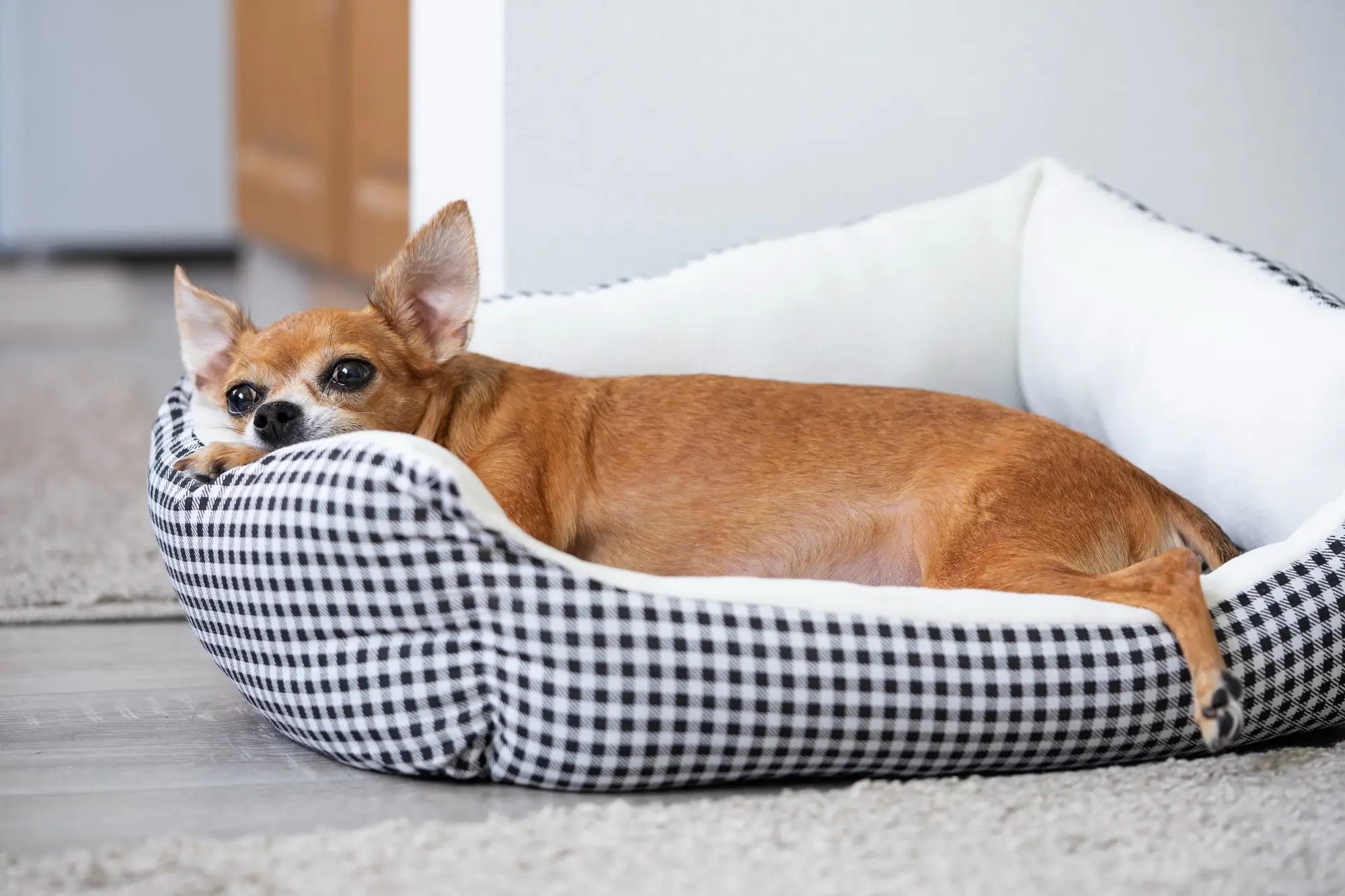
Buying a pet bed sounds simple – until the box arrives, you unpack it, and realise your Labrador overflows on three sides or your cat disappears in a giant, empty donut.
For UK homes where space is limited and every purchase needs to “earn” its place, getting the bed size right the first time saves money, returns and frustration (for both you and your pet).
This guide walks you through:
- What “small / medium / large” actually mean in real life
- How to measure your dog or cat properly
- Different sizing logic for curled-up sleepers vs sprawlers
- Special cases (puppies, seniors, multi‑pet homes)
- How to choose from the Skylos pet beds collection with more confidence
Step 1: Watch How Your Pet Actually Sleeps
Before you even grab a tape measure, spend a day or two just observing sleep positions:
-
Curled up in a tight ball?
Many cats, small breeds and anxious dogs like to curl. They’re usually happier in a round or “cuddler” style bed that hugs them. -
Stretched out like a rug?
Greyhounds, Labradors, Golden Retrievers and confident cats often sprawl on their side. They need extra length and do better on mattress or orthopaedic styles. -
Leaning against furniture or walls?
These pets often enjoy bolstered beds or beds with raised sides to rest their head.
Your pet’s sleep style tells you whether to prioritise diameter (round beds) or length/width (rectangular beds) when you choose a size.
Step 2: Take Two Simple Measurements
You don’t need a complicated chart – just two numbers:
1. Nose‑to‑Base‑of‑Tail Length
Have your dog or cat stand naturally and measure:
- From the tip of the nose
- To the base of the tail (not the very end of the tail)
2. Shoulder Height (for dogs)
Measure from the floor to the top of the shoulder.
Now use these as a starting point:
-
For rectangular beds/mattresses
- Bed length should be at least your pet’s body length, ideally +15–25 cm for comfort.
- Bed width should be enough for them to turn around and sleep on their side.
-
For round / donut / calming beds
- Bed diameter should cover your pet’s length when curled, usually body length +10–20 cm.
If your pet is between sizes, and space allows, size up – especially for dogs.
Step 3: How Bed Style Changes the “Right” Size
The same pet may need different sizes depending on the bed style.
Flat / Orthopaedic Mattresses
Best for:
- Medium and large dogs
- Seniors and dogs with joint issues
- Cats that like to stretch out
Here, length matters most. If your dog is 80 cm from nose to tail base:
- Look for a bed around 95–105 cm long
- And wide enough (60–80 cm+) for side sleeping
Orthopaedic beds in the Skylos pet beds range are designed to offer proper joint support, so erring slightly larger helps big dogs fully benefit from the foam.
Calming / Donut Beds
Best for:
- Anxious, clingy or easily startled pets
- Cats and small‑to‑medium dogs that curl up
- Pets that like to be “held” by their bed
Here, diameter and inner space are key. Don’t just check the outer size – see if there’s enough inner lying area after you subtract the raised edge.
Rough idea:
- Cats, toy breeds (up to ~5 kg): smaller donut
- Small dogs (5–10 kg): small–medium
- Medium dogs (10–20 kg): medium–large
When you browse Skylos calming‑style beds in the collection, check both outer and inner measurements – especially if your pet is stocky rather than slim.
Cave / House‑Style Cat Beds
Best for:
- Shy or easily stressed cats
- Multi‑cat homes where some cats want privacy
- Cats that love hiding in drawers, under beds or inside blankets
Key points:
- Entrance must be wide and high enough for easy entry.
- Internal space should allow a full curl + a bit of stretch.
- If your cat is large (e.g. Maine Coon, Ragdoll, British Shorthair), lean towards “large” cat houses, not “cute mini” versions.
You’ll find both open and house‑style options in the Skylos cat bed & house collection – look for designs labelled for bigger breeds if your cat is on the larger side.
Step 4: Dogs vs Cats – Sizing Mindsets are Different
For Dogs (Especially Medium–Large)
Think:
- Joint health
- Full‑body support
- Room to change position
A bed that’s too small:
- Forces dogs to curl awkwardly
- Increases pressure on elbows and hips
- Can become uncomfortable for seniors very quickly
For many UK favourites:
- French Bulldog / Pug: small to medium rectangular or donut bed – watch width for stocky bodies.
- Cocker Spaniel / Cockapoo: medium rectangular or larger donut bed.
- Labrador / Golden Retriever: large to XL mattress‑style from the Skylos pet beds range.
- Staffie / Border Collie: medium–large, depending on frame and whether they stretch or curl.
For Cats
Think:
- Security over sheer space
- Multiple beds instead of one huge one
Most cats prefer:
- A snug, safe cat bed in a quiet corner
- Another spot in a busier area to nap near you (sofa‑adjacent, office corner)
For a typical adult cat, a “medium” bed is often enough. Resize only if:
- Your cat is noticeably large (Maine Coon, Ragdoll, Norwegian Forest Cat).
- Your cat is a “sprawler” who sleeps long and straight.
Step 5: Special Cases (Where You Should Size Differently)
1. Puppies & Kittens
- They will grow, but if you jump straight to an XXL bed, some feel lost and insecure.
- Strategy:
- Start with a smaller, cosier bed.
- Add a larger mattress later, or layer a smaller bed on a larger pad during the transition.
2. Senior Pets & Arthritic Dogs
- Prioritise low entry and orthopaedic support.
- A bed that is too big and too soft can be hard to get out of.
- Look for firm‑support foam and just enough space — not a “beanbag ocean”.
Orthopaedic options in the Skylos pet bed collection are designed with this in mind: stable, supportive, and available in sizes suited to medium and large seniors.
3. Multi‑Pet Homes
- Two pets rarely share nicely long‑term if there’s only one bed.
- Instead of one massive bed, consider:
- Two medium beds side by side, or
- One large mattress + one smaller calming bed
This gives each animal a “choice” and reduces resource guarding.
Common Sizing Mistakes to Avoid
-
Buying “by breed name” only
- Not all Labradors are the same size. Always check your own dog’s measurements.
-
Ignoring thickness
- A thin “bed” that flattens to the floor is just expensive fabric. Product pages in the Skylos pets bed collection list thickness – use this like you would with a human mattress.
-
Forgetting about your room size
- A perfect XL bed is useless if it blocks doors or you keep tripping over it. Measure the spot in your home as well as your pet.
-
Thinking one bed is enough
- Many pets use different spots for day vs night.
- A main bed in the living area + a smaller one in the bedroom is often ideal.
How to Use the Skylos Pet Beds Collection Without Guesswork
When you browse the Skylos pet beds collection, try this:
-
Filter / pick by type first:
- Orthopaedic / mattress for joint support
- Calming / donut for anxious or curl‑up sleepers
- Cat houses / beds for felines
-
Open the product page and check:
- Exact measurements (length, width, height or diameter)
- Suggested weight range or breed examples (if listed)
-
Compare to your notes:
- Pet’s body length + extra 15–25 cm
- Sleep style (curled vs stretched)
- Where in the house the bed will sit
If you’re stuck between two sizes and your space allows it, go bigger for dogs, go “just right” for cats.
Quick Size Checklist (Print or Save This)
Before you click “Add to cart”, ask yourself:
- Have I measured my dog/cat from nose to tail base?
- Do they mostly curl or sprawl?
- Does the bed’s inner space fit that, not just the outer measure?
- Can my pet easily step in and out, especially if they’re older?
- Does this size make sense for the actual corner or room I’m placing it in?
If you can tick all five, you’re very close to the right size.


