
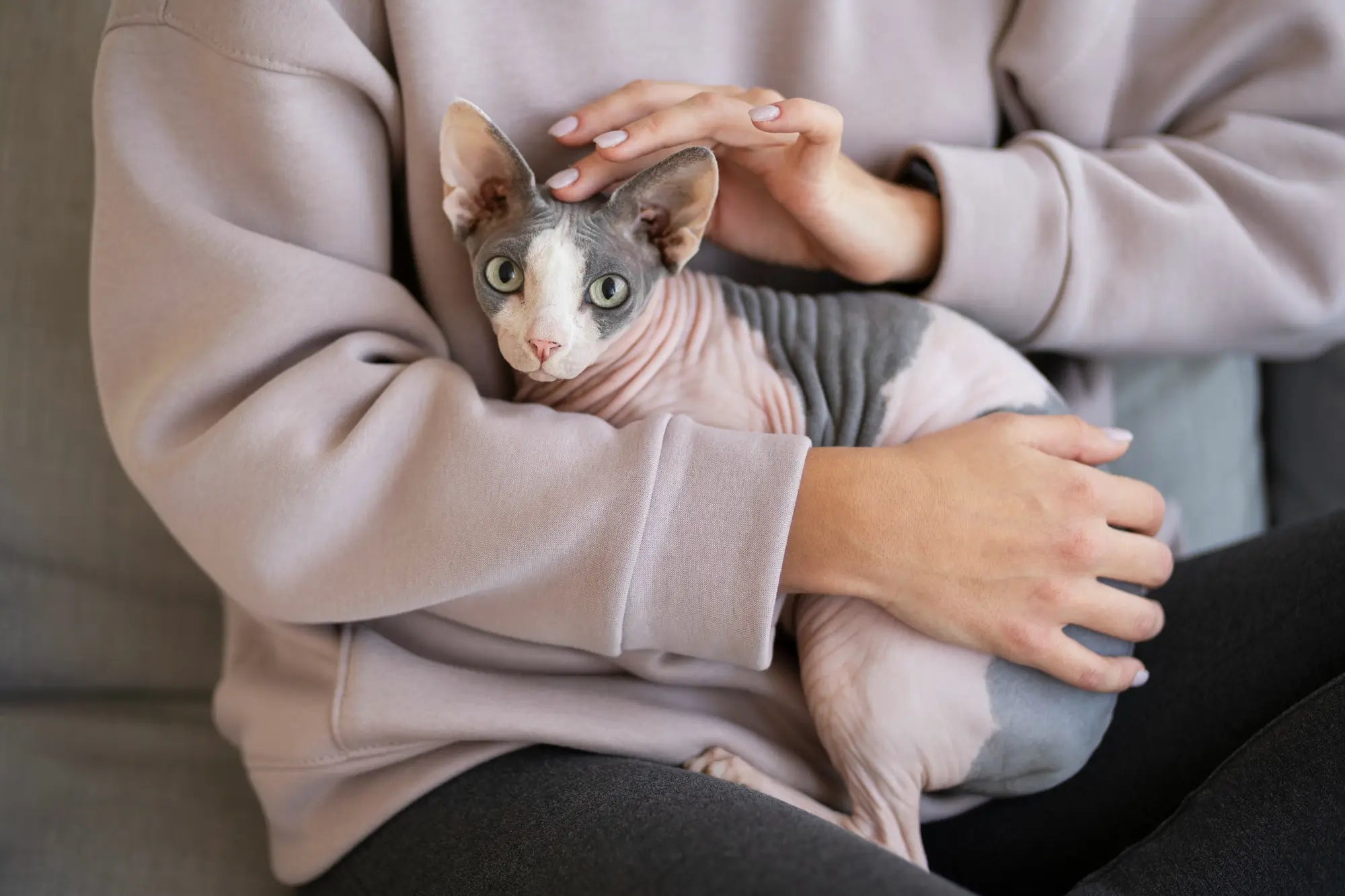
The Sphynx is one of the most distinctive cat breeds in the world. Famous for its hairless (or nearly hairless) skin, big ears and expressive eyes, the Sphynx is far more than a “novelty” cat – it’s an intelligent, highly social companion that thrives on human contact.
Because they lack a normal coat, Sphynx cats have unique care, health and comfort needs, especially around warmth, skin care and indoor living.
This guide covers:
- Typical Sphynx temperament and behaviour
- Skincare, grooming and everyday care
- Common Sphynx health concerns
- How to choose the right cat bed for a hairless cat
- Why suitable cat litter boxes and hygiene matter even more
- FAQs for current and future Sphynx owners
Sphynx Temperament & Personality
Forget the “cold, alien” stereotype – Sphynx cats are usually warm, affectionate extroverts.
Typical Sphynx traits:
- Extremely people‑oriented – often want constant contact and attention
- Social and confident, often friendly with visitors
- Playful, energetic and curious
- Often cuddle under blankets or on laps for warmth
They are ideal for owners who are home often and genuinely enjoy sharing their space, lap and time with a very interactive cat.
Indoor Lifestyle & Environment
Sphynx cats are almost always indoor‑only (or indoor with supervised, fully safe access) because:
- Their lack of fur makes them vulnerable to sunburn, wind and cold
- They are prone to losing body heat quickly
- Skin can be damaged more easily by outdoor hazards
To keep a Sphynx comfortable indoors:
- Maintain a stable, warm room temperature (they dislike cold, draughty environments)
- Provide soft, warm resting places – especially a cosy cat bed in sunny spots or near radiators (but not directly on hot surfaces)
- Offer jumpers or cat clothing in colder homes, if tolerated
Browse warm, snuggly bed options:
👉 Skylos Cat Bed & House Collection
Skincare, Grooming & Everyday Care
Because Sphynx cats don’t have a full coat, skin care replaces much of normal grooming.
Skin Care
- Sphynx skin produces natural oils that, without fur, stay on the surface.
- If not cleaned regularly, oil can build up and cause greasy skin, clogged pores and staining on fabrics.
Typical routine:
-
Wipe‑downs:
- Gentle wipe with a damp, soft cloth or pet‑safe wipe several times a week.
-
Bathing:
- Many Sphynx need a full bath every 1–3 weeks, depending on oiliness and individual needs.
- Use only vet‑approved, gentle cat shampoos.
-
Skin checks:
- Watch for redness, bumps, rashes or flaking and consult a vet if you notice changes.
-
Ears, Nails and Eyes
-
Ears:
- No fur in the ear canal means wax and debris are more visible and can build up.
- Clean gently with vet‑recommended solutions only – never use cotton buds deep in the ear.
-
Nails:
- Oil and dirt can collect in nail beds.
- Regular trims and gentle cleaning around the claws are needed.
-
Eyes:
- Some Sphynx produce more tear staining, so occasional gentle wiping may be needed.
Because their skin contacts beds directly, having a washable, soft cat bed that can be cleaned often is essential.
-
Litter Habits & Cat Litter Boxes for Sphynx Cats
Sphynx cats are usually good with litter, but their hairless skin and exposed paws mean that litter hygiene matters even more.
Key points:
-
Box hygiene:
- Scoop at least daily; wash boxes frequently to avoid bacteria and irritation.
- Sphynx skin is in direct contact with litter and box surfaces; cleanliness is critical.
-
Type & material:
- Smooth, stainless steel cat litter boxes are excellent for hygiene and easy scrubbing.
- Avoid very dusty litters that may cling to slightly oily skin.
-
Box size:
- Medium to large boxes give enough space to move and dig comfortably.
-
Location:
- Warm, draught‑free spots – Sphynx dislike cold tiles or chilly utility rooms.
Explore hygienic, Sphynx‑friendly options:
👉 Skylos Cat Litter Boxes & Litters
Sphynx Health: What to Watch For
With responsible breeding, Sphynx cats can live long lives, but they are associated with some specific health issues.
1. Hypertrophic Cardiomyopathy (HCM)
- A heart disease seen in several breeds, including Sphynx.
- Good breeders screen for HCM, but ongoing vet monitoring is important.
2. Skin Problems
- Due to unique skin exposure, Sphynx can experience:
- Acne or blackheads
- Rashes or fungal infections if skin stays damp or dirty
- Regular, gentle skincare and a clean environment reduce risk.
3. Temperature Regulation
- Sphynx can become cold quickly in cooler weather.
- They can also overheat in very hot environments.
- Temperature control + warm cat beds are key.
4. Dental Issues
- Like many purebred cats, Sphynx can be prone to dental disease.
- Routine dental care and vet checks are important.
Regular vet visits, skin monitoring and a controlled indoor environment are crucial parts of Sphynx care.
Choosing the Best Cat Bed for a Sphynx
For a hairless breed, the cat bed is not just about comfort – it’s about warmth and skin protection.
Look for:
-
Warm, soft materials
- Fleece, plush or padded fabrics that are gentle on bare skin.
-
Nest‑like or enclosed designs
- Many Sphynx love cave‑style beds or cat houses where they can burrow to stay warm.
-
Easy‑wash covers
- Because of skin oils, beds will get dirty faster; removable, machine‑washable covers are essential.
-
Right size
- Enough room to curl up, but small enough to trap warmth.
Browse Sphynx‑friendly options here:
👉 Skylos Cat Bed & House Collection
Position beds away from draughts and on soft surfaces where your Sphynx will naturally seek out heat.
Sphynx Personality in Everyday Life
In a typical UK home, a Sphynx will:
- Spend a lot of time on or near their humans – laps, shoulders, beds
- Engage actively in household life and playtime
- Seek out the warmest spots – radiators, blankets, sunbeams and padded cat beds
- Often do best with another friendly pet or a human who is around most of the day
They’re best suited to people who see a cat as a true companion, not an independent decoration.
Sphynx FAQs
1. Are Sphynx cats hypoallergenic?
Not necessarily:
- They don’t have fur to trap dander, but they still produce allergens in skin oils and saliva.
- Some allergy sufferers react less to Sphynx, others still react strongly.
Anyone with allergies should meet Sphynx cats in person before committing.
2. Do Sphynx cats get cold easily?
Yes:
- Without a full coat, they lose heat faster.
- They often need warm indoor temperatures, jumpers, blankets and cosy cat beds.
The Skylos cat bed & house range offers soft, nest‑style options ideal for heat‑loving breeds.
3. How often do Sphynx cats need baths?
It varies by individual, but many need:
- A bath every 1–3 weeks to remove oil build‑up.
Over‑bathing or harsh shampoos can dry the skin, so always follow your vet or breeder’s guidance.
4. Are Sphynx cats good with children and other pets?
Generally yes, if:
- Children are taught to handle them gently and respect their need for warmth.
- Introductions to other pets are done slowly and positively.
Their social nature often makes them good multi‑pet companions.
5. What kind of litter box is best for a Sphynx?
Ideal cat litter boxes for Sphynx:
- Smooth, easily cleaned materials – stainless steel is excellent.
- Medium to large size for comfortable movement.
- Placed in warm, non‑draughty areas so your Sphynx doesn’t avoid using it due to cold floors.
Cleanliness is key to protect delicate skin and paws.
Sphynx cats are unique – a blend of striking looks, warmth and intense sociability. If you’re ready for skincare routines, indoor management and lots of together‑time, a Sphynx can be an extraordinarily affectionate companion. With a warm, washable cat bed and hygienic cat litter boxes, you can give your Sphynx the comfort and care they need to thrive.


