
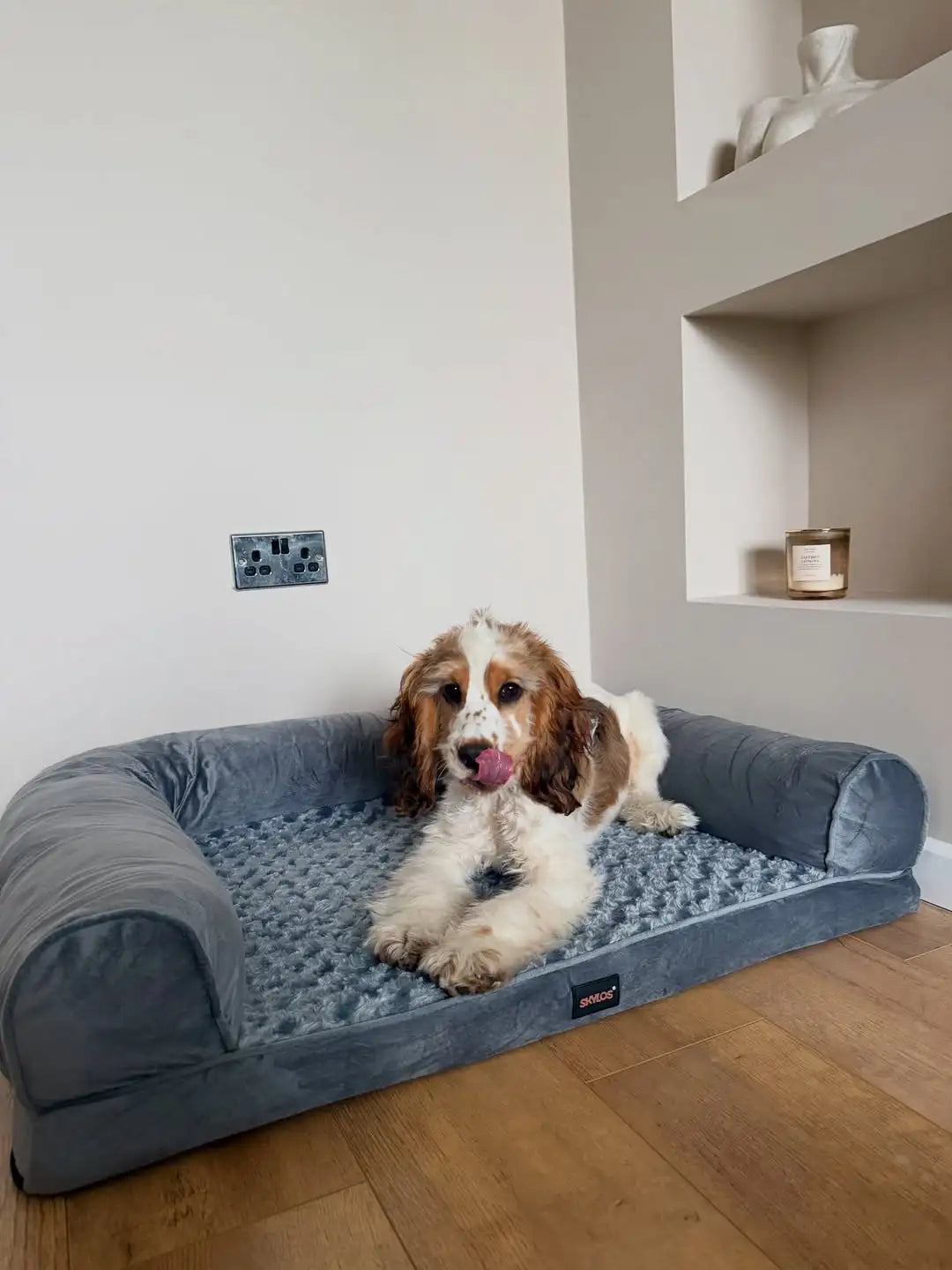
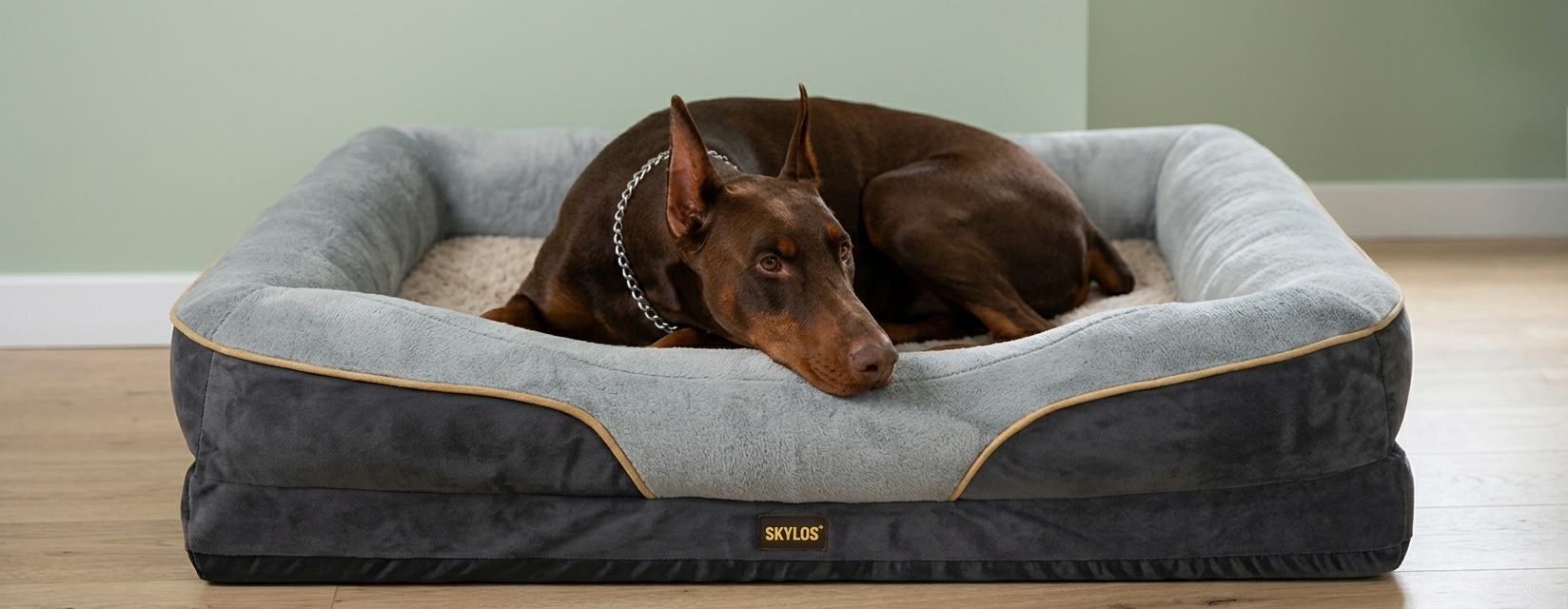
As dogs get older—or if they’re large, very active, or recovering from injury—the surface they sleep on can make a huge difference to their comfort and mobility. Many UK owners hear about orthopaedic dog beds but aren’t sure how they differ from regular beds, or whether they’re really worth the extra cost.
In this guide, we’ll explain:
- What an orthopaedic dog bed actually is
- How it differs from a standard dog bed
- Which dogs benefit most from orthopaedic support
- How to choose the right orthopaedic bed for your dog and your home
- Common mistakes to avoid when buying one
We’ll also show how designs from the Pet Skylos orthopaedic dog beds collection are built for real UK homes with both comfort and durability in mind.
1. What Is an Orthopaedic Dog Bed?
“Orthopaedic” simply means “designed to support the bones and joints”. In the context of dog beds, an orthopaedic dog bed is:
- Built with high‑density foam, memory foam or multi‑layer support, not just loose stuffing
- Thick enough to keep your dog’s body off the hard floor
- Designed to distribute weight evenly and reduce pressure on hips, elbows and spine
A regular soft bed might feel cosy at first, but if your dog’s joints sink through to the floor, it’s not providing proper orthopaedic support.
Key features of true orthopaedic dog beds:
- Dense, resilient foam base (often memory foam on top + support foam underneath)
- Consistent thickness across the whole sleeping area
- Minimal sagging, even under heavy dogs
- A shape that allows the dog to lie naturally without twisting joints
You’ll see these principles used throughout the Pet Skylos orthopaedic dog beds range.
2. Orthopaedic vs Regular Dog Beds: Main Differences
A. Filling and Support
Regular Dog Beds:
- Often use polyester fibre, loose stuffing or thin foam
- Comfortable at first, but quickly compress under weight
- Can form lumps and flat spots
Orthopaedic Dog Beds:
- Use high‑density foam or memory foam
- Maintain thickness and structure for longer
- Offer more consistent support across the entire bed
If you press down on a regular bed and feel the floor easily, it’s not orthopaedic.
B. Pressure Distribution
When a dog lies down, most pressure falls on:
- Hips
- Elbows
- Shoulders
- Spine
Regular beds often allow these points to sink down unevenly, which can:
- Increase discomfort for arthritic or ageing dogs
- Make them more restless and prone to changing position frequently
Orthopaedic beds are designed to:
- Spread your dog’s weight more evenly
- Reduce concentrated pressure points
- Support natural alignment of the spine
This is especially important for large breeds and older dogs.
C. Thickness and Floor Insulation
Regular Dog Beds:
- May be quite thin, especially cheaper models
- Offer limited insulation from cold laminate, tile or concrete floors common in UK homes
Orthopaedic Dog Beds:
- Are typically much thicker
- Provide a cushion between your dog’s joints and hard floors
- Help protect against cold and damp surfaces
In British winters, keeping your dog off cold floors can also ease joint stiffness.
3. Which Dogs Need Orthopaedic Dog Beds the Most?
Not every young, healthy dog needs an orthopaedic bed straight away, but certain groups benefit hugely:
1. Senior Dogs
Older dogs often show:
- Stiffness when getting up
- Reluctance to jump or climb
- Restlessness at night
An orthopaedic dog bed can:
- Make it easier to lie down and stand up
- Reduce the time they spend shifting to find a comfortable position
- Support better, deeper sleep
2. Large and Giant Breeds
Labradors, Golden Retrievers, German Shepherds, Rottweilers and other big dogs put more weight on every joint—and on their beds.
For them, orthopaedic support:
- Helps prevent beds from quickly sagging
- Reduces joint stress, especially on hips and elbows
- Supports long‑term mobility
Many designs in the Pet Skylos orthopaedic dog beds collection are made with large and heavy dogs in mind.
3. Dogs with Arthritis, Hip Dysplasia or Joint Problems
If your dog has been diagnosed with:
- Arthritis
- Hip or elbow dysplasia
- Luxating patella
- Spinal issues
…then a proper orthopaedic dog bed is almost essential.
It won’t cure the condition, but it can:
- Reduce pain during rest
- Decrease morning stiffness
- Complement medical and physiotherapy treatment
Always discuss sleep surfaces with your vet if your dog has chronic joint disease.
4. Highly Active and Sporting Dogs
Working dogs, agility dogs and very active pets:
- Put extra impact on joints from running, jumping and turning
- Need good recovery time between activities
An orthopaedic bed provides a “recovery zone” where muscles and joints are properly supported.
4. How to Tell If a Bed Is Truly Orthopaedic (and Not Just Marketing)
Many beds are labelled “orthopaedic” but don’t offer genuine support. Here’s what to check:
-
Foam Type and Density
- Does it specify memory foam or high‑density support foam?
- Or is it just “soft padding” with no detail?
-
Thickness
- Orthopaedic beds should typically be thicker than standard ones—thin pads rarely suffice for joint support.
-
Sagging Test
- Press your hand firmly in the centre.
- If you immediately feel the floor, it’s not offering the level of support most dogs with joint issues need.
-
Weight Recommendations
- Good orthopaedic beds will often specify suitable weights or breeds.
- Beds designed for large dogs must be built stronger than those for small breeds.
The Pet Skylos orthopaedic dog beds are designed around these principles, not just labelled for marketing.
5. Choosing the Right Orthopaedic Dog Bed for Your Dog
A. Size and Shape
- Measure your dog from nose to base of tail while lying down.
- Add 20–30 cm to allow comfortable stretching.
For sprawlers (side/back sleepers):
- Rectangular orthopaedic dog mattresses often work best.
For curl‑up sleepers:
- Orthopaedic beds with bolsters can offer both support and a sense of security.
B. Thickness and Firmness
- Large dogs usually need thicker, firmer foam than small breeds.
- The bed should feel supportive, not like a sinking pillow.
- Your dog should not “bottom out” to the floor when lying in their usual position.
C. Cover and Cleaning
For UK homes (with mud, rain and indoor living):
- Look for removable, machine‑washable covers.
- Consider water‑resistant liners to protect the foam from accidents and damp paws.
- Choose fabrics that are durable but still comfortable for daily use.
Orthopaedic beds from Pet Skylos pair supportive cores with practical covers designed for everyday life.
D. Placement in the Home
Think about where your dog likes to rest:
- Beside your bed
- In the living room near the sofa
- Away from draughts and cold doors
Place the orthopaedic dog bed:
- On a stable, non‑slip surface
- Out of direct draughts
- Somewhere your dog feels safe and included
6. Common Mistakes When Buying Orthopaedic Dog Beds
-
Choosing by softness alone
- Very soft beds can actually make joint problems worse if they lack support.
-
Buying too small
- A big dog curled tightly because the bed is small is not truly comfortable.
-
Ignoring cleaning practicality
- A bed that’s hard to wash will quickly become smelly and less appealing to both you and your dog.
-
Not considering long‑term durability
- Cheaper foam may flatten quickly, losing the orthopaedic effect—and you end up buying again.
7. Do Young, Healthy Dogs Need Orthopaedic Beds?
Not always, but:
- Large‑breed puppies and adolescents grow rapidly—they benefit from good support.
- Investing in a high‑quality orthopaedic dog bed early may help reduce joint stress over time.
Think of it as choosing a good mattress for yourself before problems arise, not only after.
FAQs: Orthopaedic Dog Beds
1. At what age should my dog switch to an orthopaedic dog bed?
There’s no strict age, but consider switching when:
- Your dog reaches senior years (often around 7+ for large breeds, 8–10 for smaller dogs).
- You notice signs of stiffness, discomfort or slower movement.
- Your vet diagnoses joint issues or recommends extra support.
2. Can an orthopaedic dog bed cure arthritis?
No. Arthritis is a long‑term condition. However, a good orthopaedic dog bed can:
- Make your dog significantly more comfortable
- Reduce pain during rest
- Improve quality of sleep
It should be part of a broader management plan from your vet.
3. Are orthopaedic dog beds only for large dogs?
No. Small and medium dogs with joint problems, injuries or simply senior age can also benefit. That said, big and heavy dogs tend to see the most obvious differences because of the increased load on their joints.
4. How long does an orthopaedic dog bed last?
It depends on:
- Foam quality
- Dog’s size and weight
- How often it’s used
A well‑made orthopaedic dog bed should last significantly longer than cheap, fibre‑filled beds. Replace it if you notice persistent sagging or if your dog seems less comfortable.
5. Where can I find orthopaedic dog beds designed for UK homes?
At Pet Skylos, our orthopaedic dog beds collection focuses on:
- High‑density and memory‑foam support
- Sizes for small, medium, large and giant breeds
- Easy‑clean covers and practical designs for UK homes
If your dog is slowing down, showing signs of joint pain or you simply want to protect their comfort as they age, choosing the right orthopaedic dog bed can make a real difference to their daily life.

Share:
Plastic vs Stainless Steel Cat Litter Boxes: Which Is Better for Your Cat and Home?